


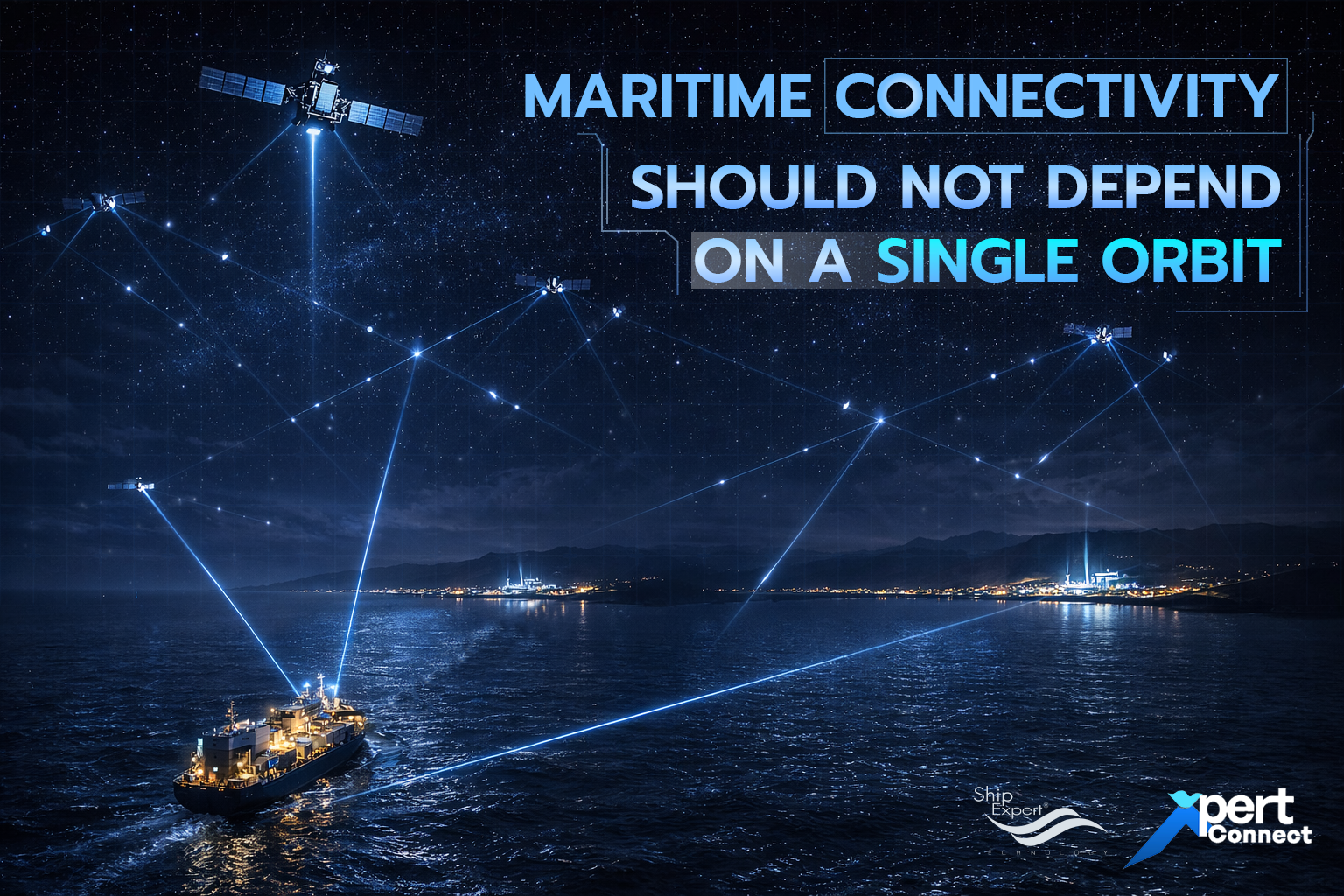
Maritime Connectivity Should Not Depend on a Single Orbit
Maritime Connectivity Should Not Depend on a Single Orbit
For decades, maritime connectivity relied on a single-orbit satellite model.
It worked — until maritime operations became digital.
Today’s fleets are no longer just navigating oceans.
They are transmitting operational data, synchronizing ERP systems, streaming AI-powered surveillance, enabling remote diagnostics, and complying with cybersecurity governance frameworks.
Connectivity is no longer a utility.
It is infrastructure.
And infrastructure cannot rely on a single point of architectural dependency.
The Strategic Risk of Single-Orbit Dependency
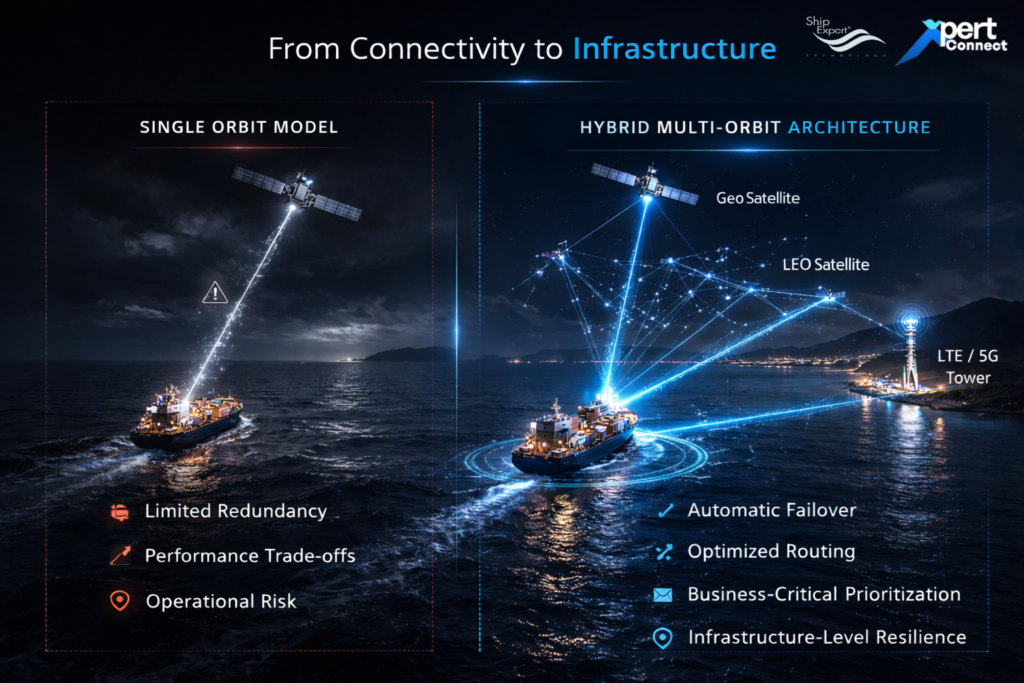
A GEO-only model provides global stability — but latency-sensitive applications suffer.
A LEO-only model offers speed — but beam transitions and network handovers introduce complexity.
Both models, when used independently, create operational exposure.
Single-orbit architecture introduces:
- Limited redundancy
- Performance trade-offs
- Higher risk of communication interruption
- Operational vulnerability in mission-critical environments
In modern maritime operations, downtime is not merely inconvenient — it is operationally disruptive.
Engineering Resilience Through Multi-Orbit Architecture
Hybrid Multi-Orbit Maritime Connectivity Architecture integrates:
- GEO for global stability
- LEO for low-latency responsiveness
- LTE/5G for nearshore continuity
- SD-WAN orchestration for intelligent traffic governance
This is not about adding bandwidth.
It is about designing resilience at the architectural level.
Two satellite infrastructures, unified under a single operational framework, create:
- Automatic failover capability
- Optimized traffic routing
- Reduced communication risk exposure
- Business-critical application prioritization
- Infrastructure-level continuity assurance
Connectivity as Strategic Maritime Infrastructure
As cyber governance standards evolve and digital compliance becomes mandatory, connectivity must be treated as part of the maritime operational backbone.
Hybrid Multi-Orbit architecture ensures:
- Data integrity in vessel-to-shore exchanges
- Stability for digital fleet governance platforms
- Secure remote system management
- Support for AI-enabled onboard systems
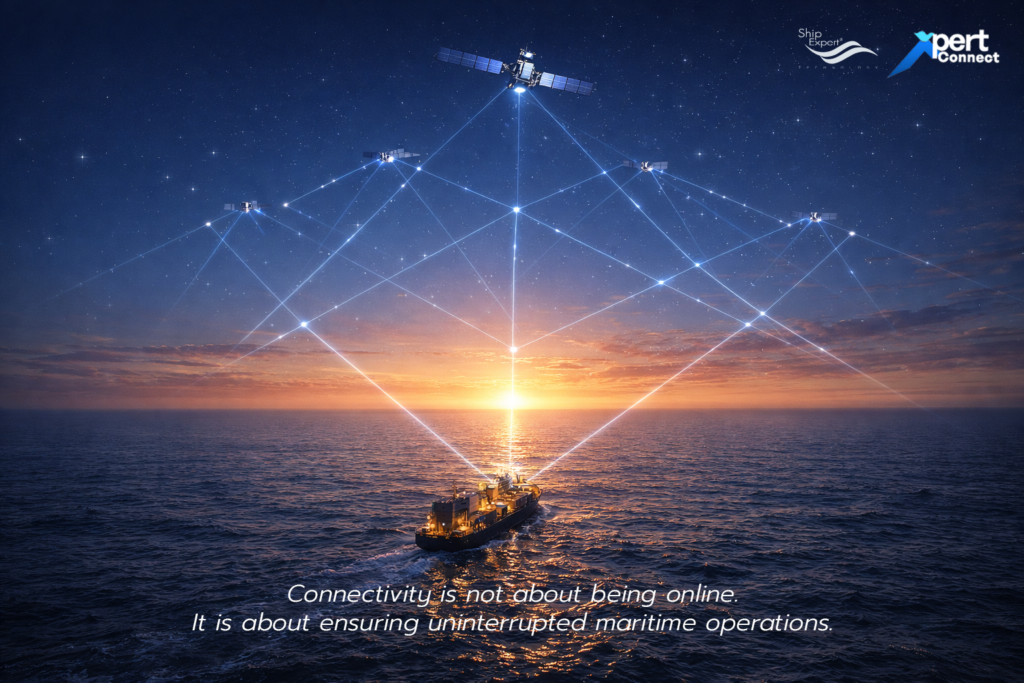
Connectivity is no longer about being online.
It is about ensuring that maritime operations remain uninterrupted, secure, and strategically resilient — regardless of orbit.
Two Orbits. One Unified Maritime Backbone.
Modern fleets require infrastructure designed for continuity, not convenience.
Maritime connectivity should never depend on a single orbit.


Related Posts
IMO Cyber Risk Management Explained for Fleet Operators
Why maritime cyber risk governance is now core to safe, compliant and resilient shipping In today’s maritime landscape, digital technologies are everywhere — from navigation and communication systems…

Anti-Drone / Anti-FPV Solution: เทคโนโลยีป้องกันภัยคุกคามจากโดรนสมัยใหม่
ภัยคุกคามจากโดรนในปัจจุบัน ในปัจจุบัน โดรน โดยเฉพาะ FPV (First Person View) Drone ได้กลายเป็นภัยคุกคามใหม่ต่อโครงสร้างพื้นฐานสำคัญ เช่น ท่าเรือ สนามบิน โรงงาน แท่นน้ำมัน เรือ และพื้นที่ความมั่นคง เนื่องจากโดรนประเภทนี้มีต้นทุนต่ำ เคลื่อนที่เร็ว บินต่ำ และสามารถโจมตีเป้าหมายได้อย่างแม่นยำ FPV Drone สามารถส่งภาพแบบ Real-time ให้ผู้ควบคุม ทำให้สามารถควบคุมโดรนเพื่อหลบหลีกสิ่งกีดขวาง และพุ่งเข้าชนเป้าหมายได้โดยตรง…

Crew Internet Entertainment Package จากสวัสดิการ สู่กลยุทธ์การบริหารกองเรือ
ในอดีต “อินเทอร์เน็ตบนเรือ” อาจถูกมองว่าเป็นเพียงสิ่งอำนวยความสะดวกเพิ่มเติม แต่ในปัจจุบันความคาดหวังของคนประจำเรือได้เปลี่ยนไปอย่างสิ้นเชิง การอยู่กลางทะเลแรมปี การไม่ได้กลับเข้าฝั่งตามกำหนด การห่างไกลครอบครัว ทั้งหมดนี้ทำให้ “การเชื่อมต่ออินเทอร์เน็ตกลางทะเล” กลายเป็นสิ่งจำเป็นในยุคนี้ ความท้าทายของอินเทอร์เน็ตบนเรือแบบเดิม หลายกองเรือยังใช้ระบบอินเทอร์เน็ตที่ใช้แบนด์วิดท์ร่วมกันทั้งหมด ผลที่เกิดขึ้นคือ: เน็ตช้าในช่วงที่มีคนใช้งานพร้อมกัน วิดีโอคอลกับครอบครัวที่บ้านแล้วกระตุก คนประจำเรือเกิดความไม่สะดวกในการใช้งาน แม้จะดูเป็นเรื่องเล็ก แต่ในระยะยาวส่งผลต่อขวัญกำลังใจ ความพึงพอใจ และแรงจูงใจในการทำงานของคนประจำเรือ Crew Internet Entertainment Package ของ Ship Expert…