


Your Fleet Has Blind Spots.
What the dashboard won’t tell you — FRIDAY will.
FRIDAY ERP — Planned Maintenance System · Ship Expert Technology
There’s a version of your fleet that exists on paper — schedules signed, tasks ticked, reports filed. And then there’s the version that actually exists at sea.
The gap between those two realities is where breakdowns happen. Where port state control finds problems. Where charter penalties are born.
FRIDAY ERP’s Planned Maintenance System was built for the second version. Not the paper fleet. The real one.
What FRIDAY PMS Actually Does
FRIDAY ERP is a maritime ERP platform purpose-built for ship management companies. At its core, the PMS module handles every maintenance activity across your fleet — scheduling, execution, tracking, and reporting — in one connected system.
Where traditional PMS tools are rigid and manual, FRIDAY adapts. To equipment that runs harder than planned. To defects that surface mid-voyage. To decisions that shore management needs to make now — not after the next email from the vessel.
Here’s what that looks like in practice.
1.Task & Scheduling — Two Types, One System
FRIDAY runs two types of maintenance tasks, and the difference matters.
Calendar Tasks are triggered by time — weekly, monthly, quarterly, annually. When a task is completed, FRIDAY automatically calculates the next due date. Advance alerts go out at 30, 14, and 7 days before it’s due. No manual tracking. No missed cycles. Fully auditable for class society and PSC requirements.
Run Hour Tasks are triggered by machinery usage — every 500 hours, every 2,000 hours, whatever the equipment demands. Crew log operating hours regularly, and FRIDAY tracks cumulative totals against each threshold in real time. When hours approach the limit, the task surfaces automatically. When they exceed it, an alert fires.
Both task types feed into a single forward schedule — one unified view of everything due across the fleet, sorted by urgency, projected weeks ahead. Planning dry-dock windows, spare parts orders, and crew assignments becomes proactive instead of reactive.
2.Defect Flow — Nothing Gets Lost
Equipment fails. Conditions change. Things are found that weren’t in any plan. FRIDAY’s Defect Flow makes sure those moments don’t disappear into informal conversation.
Any crew member can raise a defect the moment they find a fault — classified immediately as minor, moderate, or critical. That classification drives everything: who reviews it, how fast it needs resolving, and whether shore management needs to know now.
From there, the defect moves through a clean workflow: review, corrective work order, parts requisition if needed, temporary mitigation if the fix must wait, and full close-out with resolution evidence attached.
Defects that age without resolution trigger automatic escalation to shore. No more outstanding issues quietly accumulating on a vessel while the superintendent assumes everything is fine. FRIDAY surfaces them — by vessel, by severity, by age — before they become a vetting finding.
3.Unscheduled & Rescheduled Tasks — Honesty Built In
Real maintenance doesn’t always follow the plan. FRIDAY handles both deviations with the same structured discipline.
Unscheduled Tasks cover work that wasn’t planned but needs doing — a regulatory finding, a vetting recommendation, opportunity maintenance while equipment is already open. Whatever the source, FRIDAY captures it with the same fields, the same workflow, and the same close-out evidence as planned work. Nothing informal. Nothing invisible.
Rescheduled Tasks handle the moments when planned work can’t happen on time. In legacy systems, this produces falsified records or silent overdue queues. FRIDAY provides a third option: documented deferral with a reason, a new date, and an approval trail.
Depending on how critical the task is, rescheduling may require superintendent sign-off — or fleet manager escalation if a class or regulatory limit is being pushed. The history is preserved. Auditors see exactly what happened, why, and who approved it.
Over time, rescheduling patterns tell a story. The same task deferred repeatedly on the same vessel signals something worth investigating — a parts problem, a crew capacity issue, or a schedule that doesn’t fit the vessel’s operational reality.
4. Reports — From Vessel Data to Fleet Decisions
Every action in FRIDAY flows into the Reports module. This is where individual vessel records become fleet-level intelligence — without anyone having to compile a spreadsheet.
Key standard reports include a live Maintenance Status Report showing on-time, due soon, and overdue tasks across all vessels; a Defect Status Report filterable by severity and age; a Rescheduled Task Report tracking deferral patterns; and a Run Hour Log for class compliance evidence.
The KPI dashboard sits above all of it — PMS completion rate, defect resolution time, overdue task aging, and the ratio of unscheduled to planned work across the fleet. That last metric is one of the most telling: a high unscheduled ratio is a leading indicator of deferred maintenance catching up, or equipment that the planned schedule hasn’t adequately addressed.
No phone calls to the vessel. No waiting for the weekly report. The numbers are live.
The Whole Picture
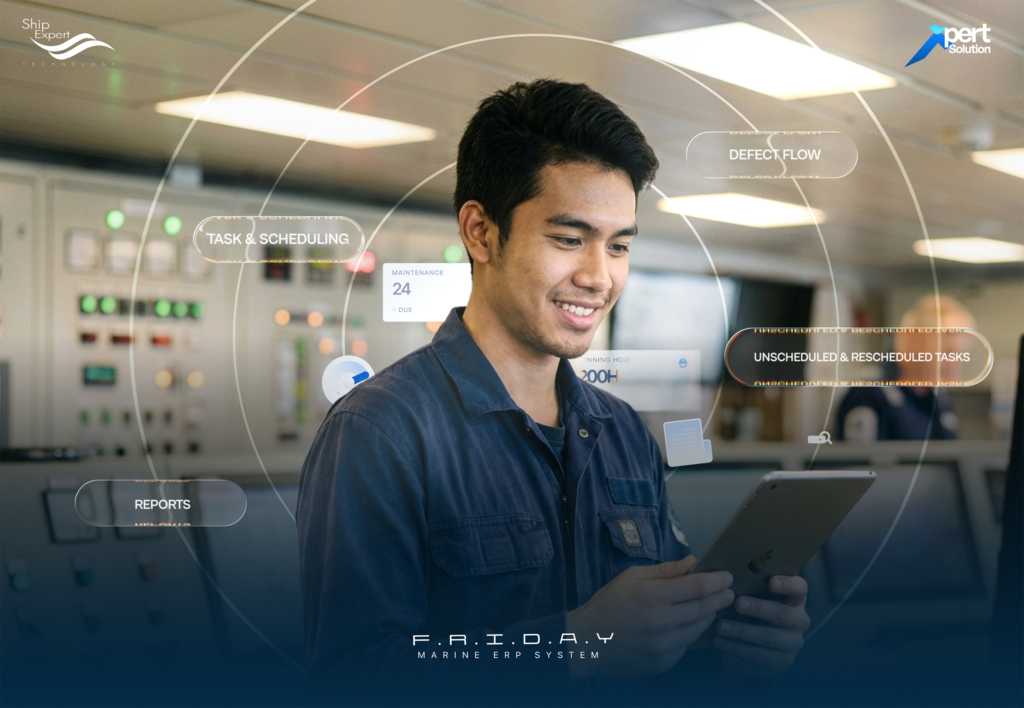
A run hour task triggers as machinery hours climb. The crew completes it and logs the work. During the job, a defect surfaces — raised immediately and linked to the task. Parts aren’t onboard, so the defect stays open and a requisition fires automatically. The next maintenance cycle needs to shift — a rescheduled request goes to the superintendent with a logged reason. While the machinery was open, an unscheduled inspection was added and closed. All of it flows into the weekly fleet report reviewed ashore.
No phone calls. No gaps. No blind spots.
That’s FRIDAY PMS — every vessel, every schedule, fully visible.
See What Your Fleet Is Really Telling You
FRIDAY ERP is developed by Ship Expert Technology Co., Ltd. — built for ship managers who need more than a checklist.


Related Posts
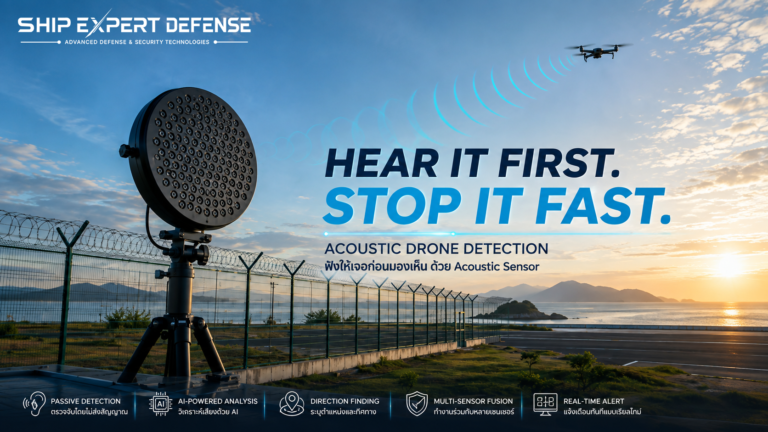
ฟังให้เจอก่อนมองเห็น บทบาทของ Acoustic Sensor ในระบบต่อต้านโดรน
เมื่อพูดถึงการตรวจจับโดรน หลายคนมักนึกถึงเรดาร์ที่ค้นหาเป้าหมายบนท้องฟ้า กล้องตรวจการณ์ที่ช่วยยืนยันภาพ หรือระบบตรวจจับคลื่นความถี่วิทยุที่วิเคราะห์การสื่อสารระหว่างโดรนกับผู้ควบคุม แต่ยังมีอีกหนึ่งเทคโนโลยีที่ช่วยเพิ่มความสามารถในการรับรู้ภัยคุกคาม นั่นคือ Acoustic Sensor หรือเซนเซอร์ตรวจจับโดรนด้วยเสียง เมื่อเสียงใบพัดกลายเป็นสัญญาณเตือนภัย ระหว่างบิน มอเตอร์และใบพัดของโดรนจะสร้างรูปแบบเสียงที่มีลักษณะเฉพาะ ระบบ Acoustic Sensor ใช้ไมโครโฟนหรือชุดไมโครโฟนแบบ Microphone Array รับสัญญาณดังกล่าว ก่อนนำข้อมูลไปวิเคราะห์เพื่อประเมินว่าเป็นเสียงของโดรนหรือเสียงจากสภาพแวดล้อม เทคโนโลยีประมวลผลสัญญาณและปัญญาประดิษฐ์สามารถช่วยจำแนกเสียงโดรนออกจากเสียงรบกวน เช่น ยานพาหนะ เครื่องจักร หรือนก ขณะที่การใช้ไมโครโฟนหลายตัวช่วยประเมินทิศทางของแหล่งกำเนิดเสียงได้ งานวิจัยยังแสดงให้เห็นว่าสามารถแปลงข้อมูลเสียงเป็น Spectrogram…
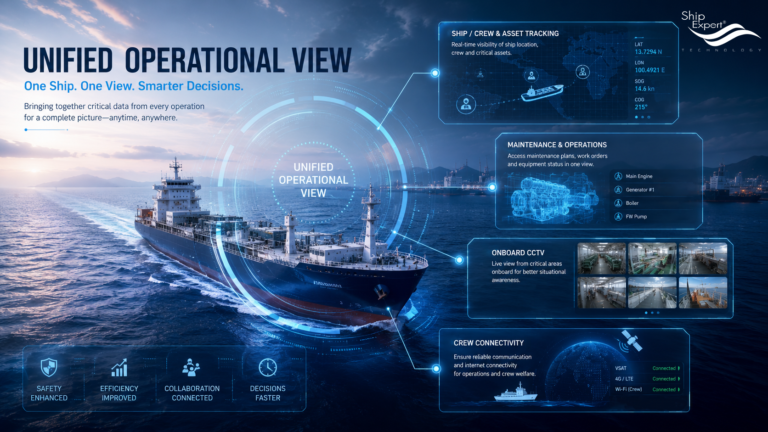
ทำไมธุรกิจเดินเรือจึงต้องการ Unified Operational View
การบริหารเรือในปัจจุบันเกี่ยวข้องกับข้อมูลมากมายมากกว่าในอดีต ตั้งแต่ตำแหน่งของเรือ สถานะลูกเรือและทรัพย์สินสำคัญบนเรือ แผนซ่อมบำรุง ภาพจากกล้อง CCTV ไปจนถึงการบริหารการเชื่อมต่ออินเทอร์เน็ตดาวเทียม ระบบเหล่านี้ช่วยให้ผู้ปฏิบัติงานรับรู้สิ่งที่เกิดขึ้นในแต่ละด้าน แต่เมื่อข้อมูลสำคัญกระจายอยู่ในหลายแพลตฟอร์ม หลายหน้าจอ และหลายทีม คำถามสำคัญจึงไม่ใช่เพียงว่า “เรามีข้อมูลเพียงพอหรือไม่” แต่คือ “เรามองเห็นภาพรวมของสถานการณ์ได้ชัดเจนเพียงใด เมื่อต้องตัดสินใจจริง” เรือหนึ่งลำ หลายระบบ หลายมุมมอง สำหรับบริษัทเดินเรือ เรือหนึ่งลำอาจมีระบบสนับสนุนการปฏิบัติงานหลายประเภท โดยแต่ละระบบมีบทบาทแตกต่างกัน ระบบติดตามตำแหน่งช่วยให้ทราบว่าเรืออยู่บริเวณใด ขณะที่ระบบติดตามลูกเรือและทรัพย์สินช่วยให้ผู้เกี่ยวข้องเข้าใจว่าบุคลากรหรืออุปกรณ์สำคัญอยู่ส่วนใดของเรือ ระบบซ่อมบำรุงและการปฏิบัติงานช่วยจัดการแผนงาน ประวัติการซ่อม และสถานะของเครื่องจักร ส่วนกล้อง…
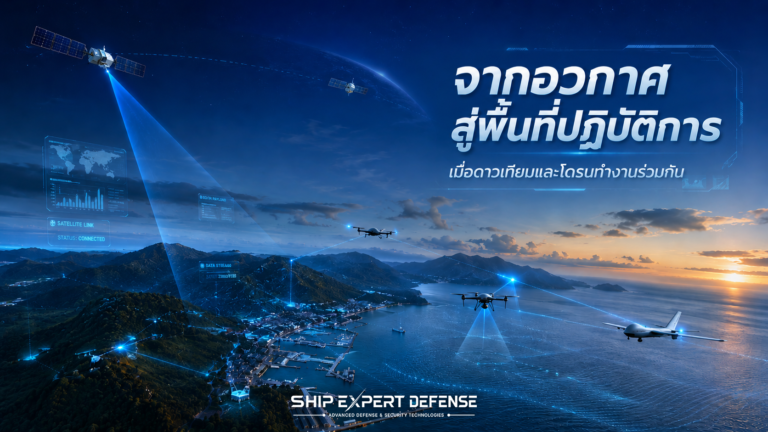
จากอวกาศสู่พื้นที่ปฏิบัติการ
เมื่อดาวเทียมและโดรนทำงานร่วมกัน เมื่อพูดถึงการตรวจการณ์พื้นที่ชายแดน ชายฝั่ง ทะเล โครงสร้างพื้นฐานสำคัญ หรือพื้นที่เกิดภัยพิบัติ เทคโนโลยีที่มักถูกกล่าวถึงคือ “โดรน” และ “ดาวเทียมสำรวจโลก” แม้ทั้งสองระบบจะสามารถบันทึกภาพและติดตามความเปลี่ยนแปลงได้เหมือนกัน แต่ในทางปฏิบัติกลับมีจุดเด่นและข้อจำกัดต่างกัน จึงไม่ควรมองว่าเทคโนโลยีใดดีกว่า หากควรพิจารณาว่าแต่ละระบบเหมาะกับขั้นตอนใดของภารกิจ ดาวเทียม: มองเห็นภาพกว้างจากอวกาศ จุดแข็งสำคัญของดาวเทียมคือความสามารถในการสำรวจพื้นที่ขนาดใหญ่ ไม่ว่าจะเป็นแนวชายแดน พื้นที่ทางทะเล เส้นทางคมนาคม หรือบริเวณที่เข้าถึงได้ยาก ข้อมูลภาพจากหลายช่วงเวลายังสามารถนำมาเปรียบเทียบเพื่อค้นหาการเปลี่ยนแปลง เช่น การปรากฏขึ้นของสิ่งปลูกสร้าง การเคลื่อนย้ายยานพาหนะ หรือกิจกรรมที่ผิดไปจากรูปแบบปกติ ดาวเทียมแบบ…