


IMO Cyber Risk Management Explained for Fleet Operators
Why maritime cyber risk governance is now core to safe, compliant and resilient shipping
In today’s maritime landscape, digital technologies are everywhere — from navigation and communication systems to cargo management and engine monitoring. But with increased connectivity comes increased vulnerability to cyber threats that can disrupt vessel operations, compromise safety, or even lead to regulatory non-compliance. This is why cyber risk management has become a central governance topic for fleet operators worldwide.
In response to these threats, the International Maritime Organization (IMO) has developed formal guidance requiring ship operators to integrate cyber risk management into their safety frameworks — a change that is reshaping how fleets are governed and audited.
Why Maritime Cyber Risk Matters
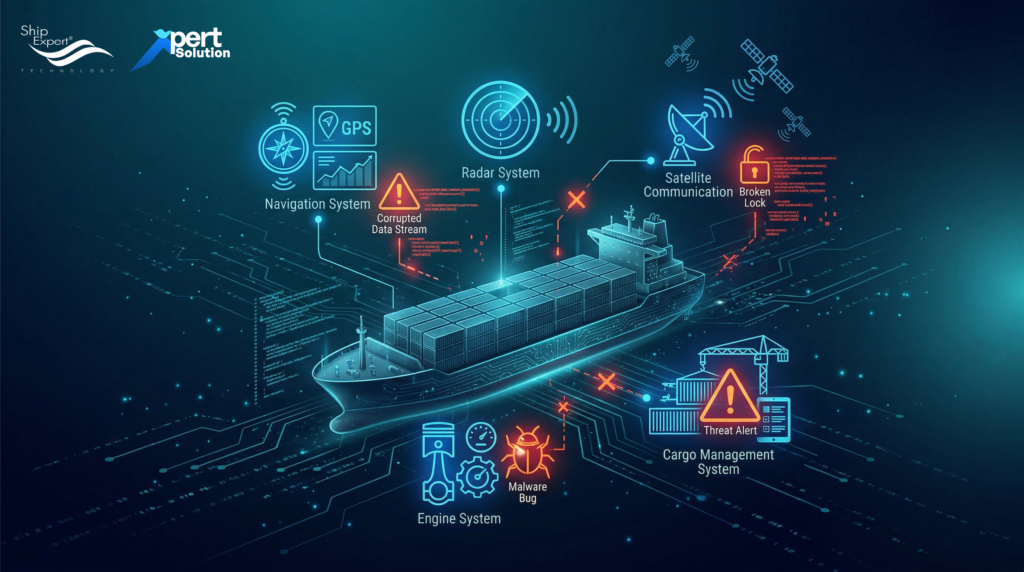
Unlike traditional IT systems, vessel systems are often deeply integrated with critical operational technology (OT) — such as propulsion control, cargo systems, and navigation networks — meaning a cyber incident can directly affect the physical safe operation of a vessel. These systems are essential for safe and efficient ship operations, yet they also present attractive targets for attackers if not properly secured.
Many maritime cyber incidents begin with seemingly minor vulnerabilities, such as unprotected network access, out-of-date software, or unsecured remote connections. Left unmanaged, these vulnerabilities can cascade into operational failures, safety breaches, or downtime that impacts schedules, profitability, and reputation. Effective risk governance is therefore no longer optional — it’s required.
IMO’s Response: A Governance Framework
In recognition of the growing cyber threat landscape, the IMO adopted Resolution MSC.428(98) in 2017, which encourages administrations and operators to address cyber risks within their Safety Management Systems (SMS) aligning cyber risk management with the well-established International Safety Management (ISM) Code.
Following this, the IMO issued Guidelines on Maritime Cyber Risk Management (MSC-FAL.1/Circ.3 and subsequent revisions), providing high-level recommendations on how organizations should manage cyber risks in a systematic and integrated way. These guidelines are intended to be incorporated into existing risk management processes and complement traditional safety and security practices.
Core Functional Elements of Cyber Risk Management
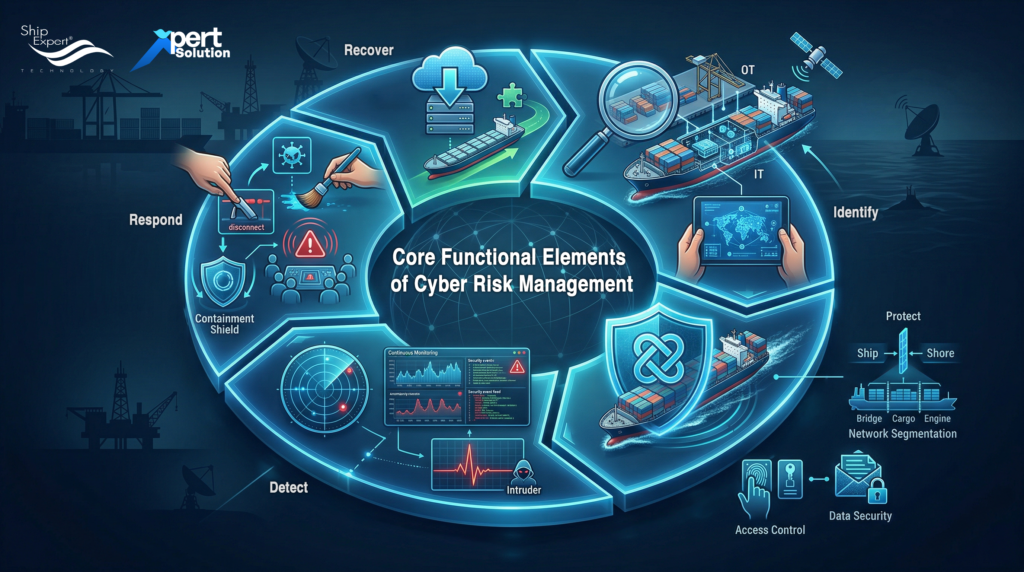
The IMO guidelines define several key functional elements that should form the backbone of a maritime cyber risk governance program:
1. Identify
Identify all vessel systems, assets, data, and interfaces that could be impacted by cyber threats and maintain a current inventory of these systems. Understanding what you have is the first step in knowing what you need to protect.
2. Protect
Implement protective measures — both technical and organizational — to minimise the likelihood of cyber incidents. This includes network segmentation, access control, patch management, and secure configuration practices.
3. Detect
Maintain ongoing monitoring and detection capabilities to identify suspicious activities or breaches early. Rapid detection reduces the impact of cyber events and enables timely response.
4. Respond
Develop clear procedures for responding to cyber incidents, including roles, communication plans, and escalation paths, both onboard and with shore-side support teams.
5. Recover
Establish recovery strategies to restore systems and operations after a cyber incident, ensuring continuity and minimal operational disruption.
These functional elements closely align with internationally recognised cybersecurity frameworks, such as ISO/IEC 27001 and the NIST Cybersecurity Framework, providing a structured approach that can evolve with emerging threats.
Integration With the ISM Code
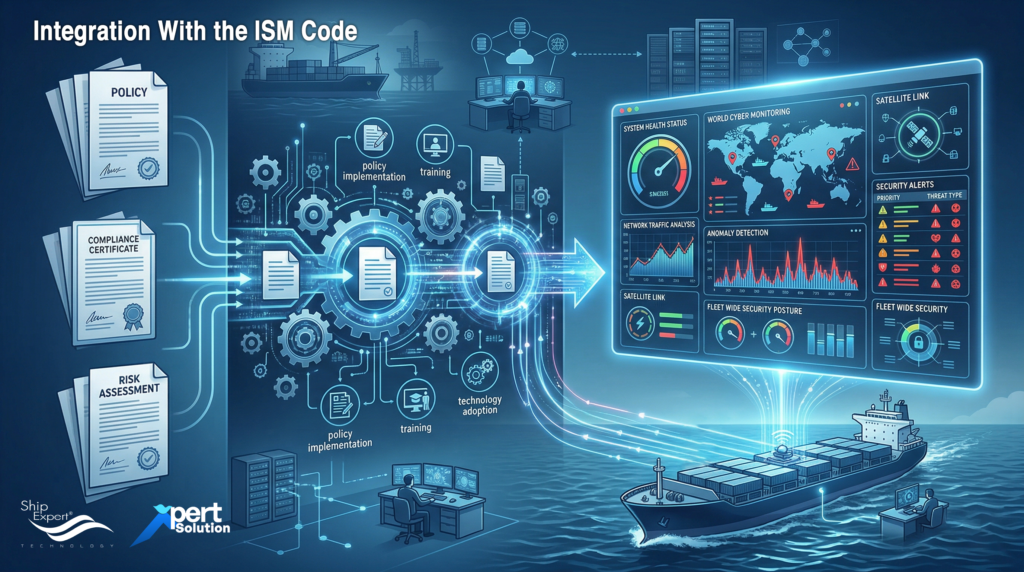
The IMO’s Resolution MSC.428(98) explicitly encourages cyber risk management to be integrated into the Safety Management System (SMS), which means operators must treat cyber risk like any other safety risk — assess it, manage it, and demonstrate evidence of that process during ISM audits.
Common Gaps in Maritime Cyber Governance
Despite this guidance, many fleets still struggle with implementation. Risk assessments may be incomplete, documentation may be outdated, and crew awareness of cyber threats can be minimal. Often, there is no centralized visibility of cyber activities or incident response planning, leaving vessels exposed to avoidable risk.
For a robust governance posture, maritime operators should:
- Conduct regular cyber risk assessments
- Document policies and procedures clearly
- Assign accountability for cyber governance
- Train crew and shore staff on cyber hygiene
- Implement monitoring and incident response capabilities
This structured approach ensures compliance with IMO guidelines and strengthens operational resilience against cyber events.
Why Centralized Maritime SOC Matters
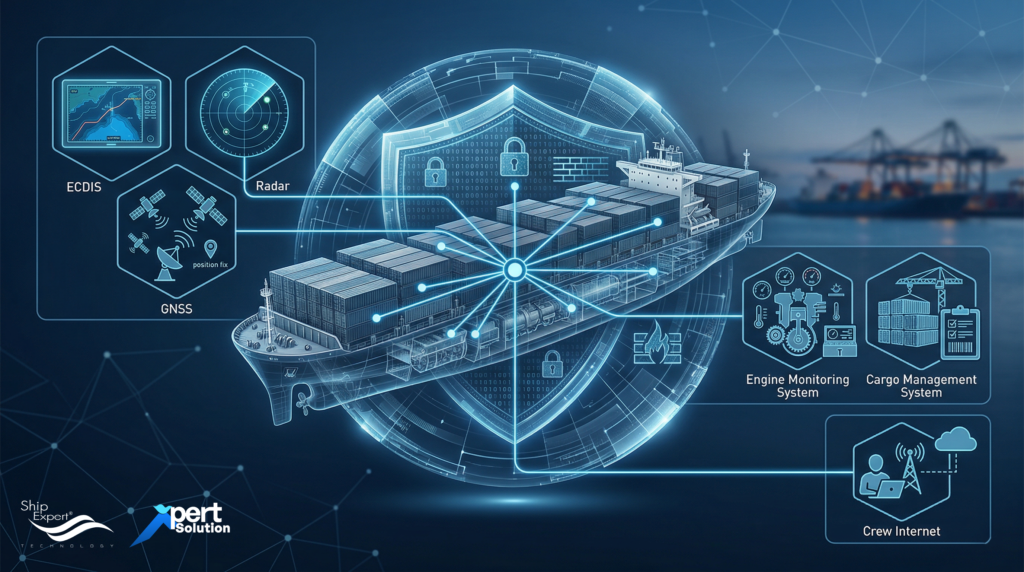
Modern vessels operate as cyber-physical systems, integrating:
- Navigation systems (ECDIS, Radar, GNSS)
- Satellite communication networks
- Engine and propulsion monitoring systems
- Cargo management platforms
- Crew internet and remote vendor access
Without centralized monitoring, cyber incidents may go undetected until operational disruption occurs.
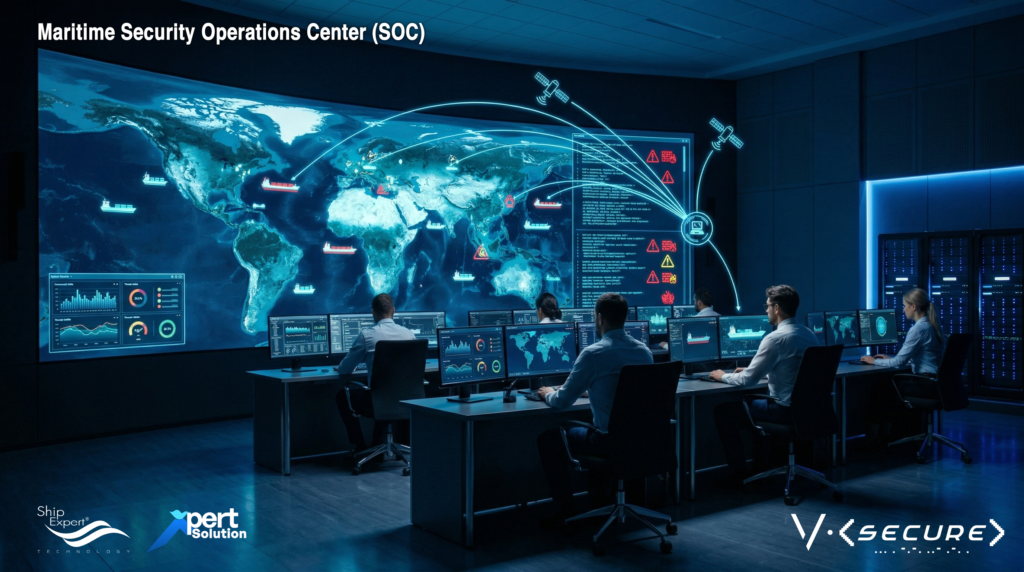
A maritime-focused Security Operations Center (SOC) enables:
- Real-time anomaly detection
- Centralized log monitoring
- Shore-based cyber oversight
- Coordinated incident response
- Compliance-ready reporting for audit purposes
Continuous monitoring transforms cyber management from reactive troubleshooting into structured governance.
Introducing V.Secure – Maritime Cyber Governance Support
V.Secure is maritime cybersecurity and SOC framework, designed to align with IMO cyber risk management principles.
Rather than replacing internal policies, V.Secure strengthens implementation through:
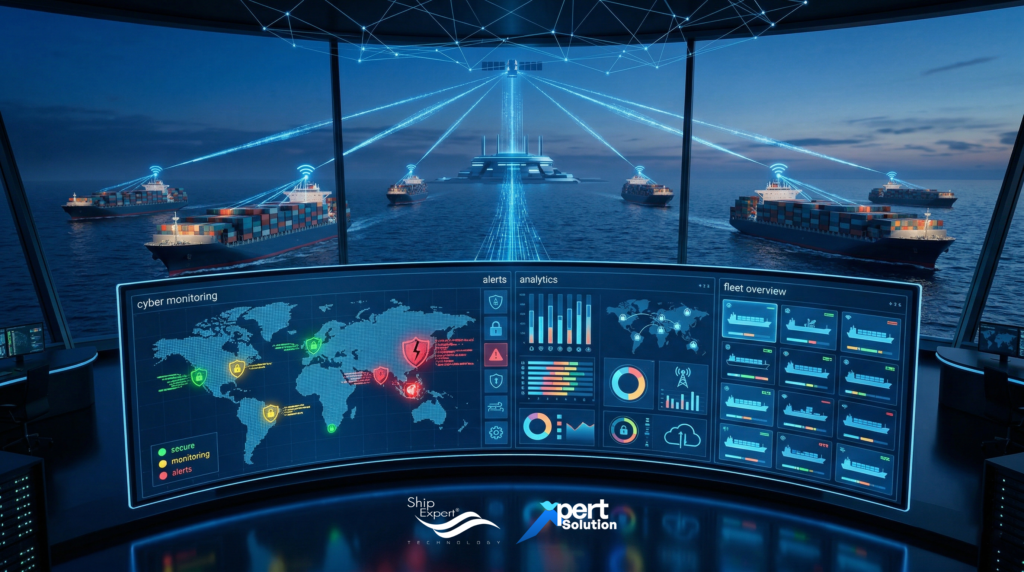
- Centralized maritime SOC monitoring
• OT-aware anomaly detection
• Fleet-wide cyber visibility
• Incident coordination support
• Governance-level reporting
By integrating monitoring, detection, and response capabilities into fleet operations, V.Secure helps operators operationalize the IMO framework — not just document it.
In practical terms, this means:
- Compliance officers gain structured reporting
- Fleet managers gain operational visibility
- Technical teams gain faster incident response capability
Cyber governance becomes measurable, auditable, and defensible.
Conclusion
IMO Cyber Risk Management is not merely regulatory guidance — it is a strategic framework for managing operational exposure in modern shipping.
By integrating policy, process, technical safeguards, and centralized monitoring, fleet operators can transform cyber risk from vulnerability into a governed operational domain.
In an industry where safety, reliability, and reputation are critical, cyber governance is no longer optional.
It is infrastructure.
References
-https://wwwcdn.imo.org/localresources/en/OurWork/Security/Documents/MSC-FAL.1-Circ.3-Rev.3.pdf?
– https://www.imo.org/en/ourwork/security/pages/cyber-security.aspx?
– https://www.dnv.com/maritime/insights/topics/maritime-cybersecurity/regulations/?
– https://www.imca-int.com/resources/technical-library/imo-guidelines-on-maritime-cyber-risk-management/?
– https://gtmaritime.com/imo-the-ism-code-and-maritime-cyber-risk-management/?


Related Posts
Anti-Drone / Anti-FPV Solution: เทคโนโลยีป้องกันภัยคุกคามจากโดรนสมัยใหม่
ภัยคุกคามจากโดรนในปัจจุบัน ในปัจจุบัน โดรน โดยเฉพาะ FPV (First Person View) Drone ได้กลายเป็นภัยคุกคามใหม่ต่อโครงสร้างพื้นฐานสำคัญ เช่น ท่าเรือ สนามบิน โรงงาน แท่นน้ำมัน เรือ และพื้นที่ความมั่นคง เนื่องจากโดรนประเภทนี้มีต้นทุนต่ำ เคลื่อนที่เร็ว บินต่ำ และสามารถโจมตีเป้าหมายได้อย่างแม่นยำ FPV Drone สามารถส่งภาพแบบ Real-time ให้ผู้ควบคุม ทำให้สามารถควบคุมโดรนเพื่อหลบหลีกสิ่งกีดขวาง และพุ่งเข้าชนเป้าหมายได้โดยตรง…

Crew Internet Entertainment Package จากสวัสดิการ สู่กลยุทธ์การบริหารกองเรือ
ในอดีต “อินเทอร์เน็ตบนเรือ” อาจถูกมองว่าเป็นเพียงสิ่งอำนวยความสะดวกเพิ่มเติม แต่ในปัจจุบันความคาดหวังของคนประจำเรือได้เปลี่ยนไปอย่างสิ้นเชิง การอยู่กลางทะเลแรมปี การไม่ได้กลับเข้าฝั่งตามกำหนด การห่างไกลครอบครัว ทั้งหมดนี้ทำให้ “การเชื่อมต่ออินเทอร์เน็ตกลางทะเล” กลายเป็นสิ่งจำเป็นในยุคนี้ ความท้าทายของอินเทอร์เน็ตบนเรือแบบเดิม หลายกองเรือยังใช้ระบบอินเทอร์เน็ตที่ใช้แบนด์วิดท์ร่วมกันทั้งหมด ผลที่เกิดขึ้นคือ: เน็ตช้าในช่วงที่มีคนใช้งานพร้อมกัน วิดีโอคอลกับครอบครัวที่บ้านแล้วกระตุก คนประจำเรือเกิดความไม่สะดวกในการใช้งาน แม้จะดูเป็นเรื่องเล็ก แต่ในระยะยาวส่งผลต่อขวัญกำลังใจ ความพึงพอใจ และแรงจูงใจในการทำงานของคนประจำเรือ Crew Internet Entertainment Package ของ Ship Expert…
Shadow Connectivity ความเสี่ยงเงียบที่กองเรือยุคใหม่ไม่ควรมองข้าม
เรือในปัจจุบันไม่ได้เป็นเพียงยานพาหนะลอยน้ำที่ขับเคลื่อนด้วยเครื่องจักรอีกต่อไป แต่กำลังพัฒนาไปสู่ Cyber-Physical Systems ที่ผสานระบบควบคุม เครื่องจักร ระบบนำทาง และเครือข่ายดิจิทัลเข้าไว้ด้วยกันอย่างซับซ้อนท่ามกลางความสะดวกสบายและทันสมัยของระบบการบำรุงรักษาระยะไกล (Remote Monitoring) แต่มีความเสี่ยงทาง Cyber ในรูปแบบใหม่ต่อเจ้าของเรือที่กำลังเติบโตแบบเงียบ ๆ สิ่งนี้เรียกว่า Shadow Connectivity Shadow Connectivity คืออะไร? Shadow Connectivity คือ การมี “ช่องทางการเชื่อมต่อเครือข่าย” ในระบบเรือโดยที่คนประจำเรือหรือเจ้าของเรือไม่ได้รับรู้หรือไม่ได้ควบคุมอย่างเป็นทางการ โดยทั่วไปมักเกิดจาก: ผู้ผลิตเครื่องยนต์ติดตั้ง…