
When Connectivity Becomes Control
There was a time when satellite connectivity at sea meant one thing: access. If the signal worked, the job was done. But today, a vessel is no longer just a ship moving cargo across oceans. It is a floating digital environment. Crew welfare depends on it. ERP synchronization relies on it. IoT telemetry feeds through it. Compliance reporting, remote diagnostics, cybersecurity monitoring — all converge into the same network layer. And this is where many fleets quietly face a structural challenge.
They add connectivity.
They upgrade to LEO.
They keep GEO as backup.
But they rarely stop to ask a deeper question: Who is orchestrating all of this?
Beyond Bandwidth: The Multi-Orbit Reality
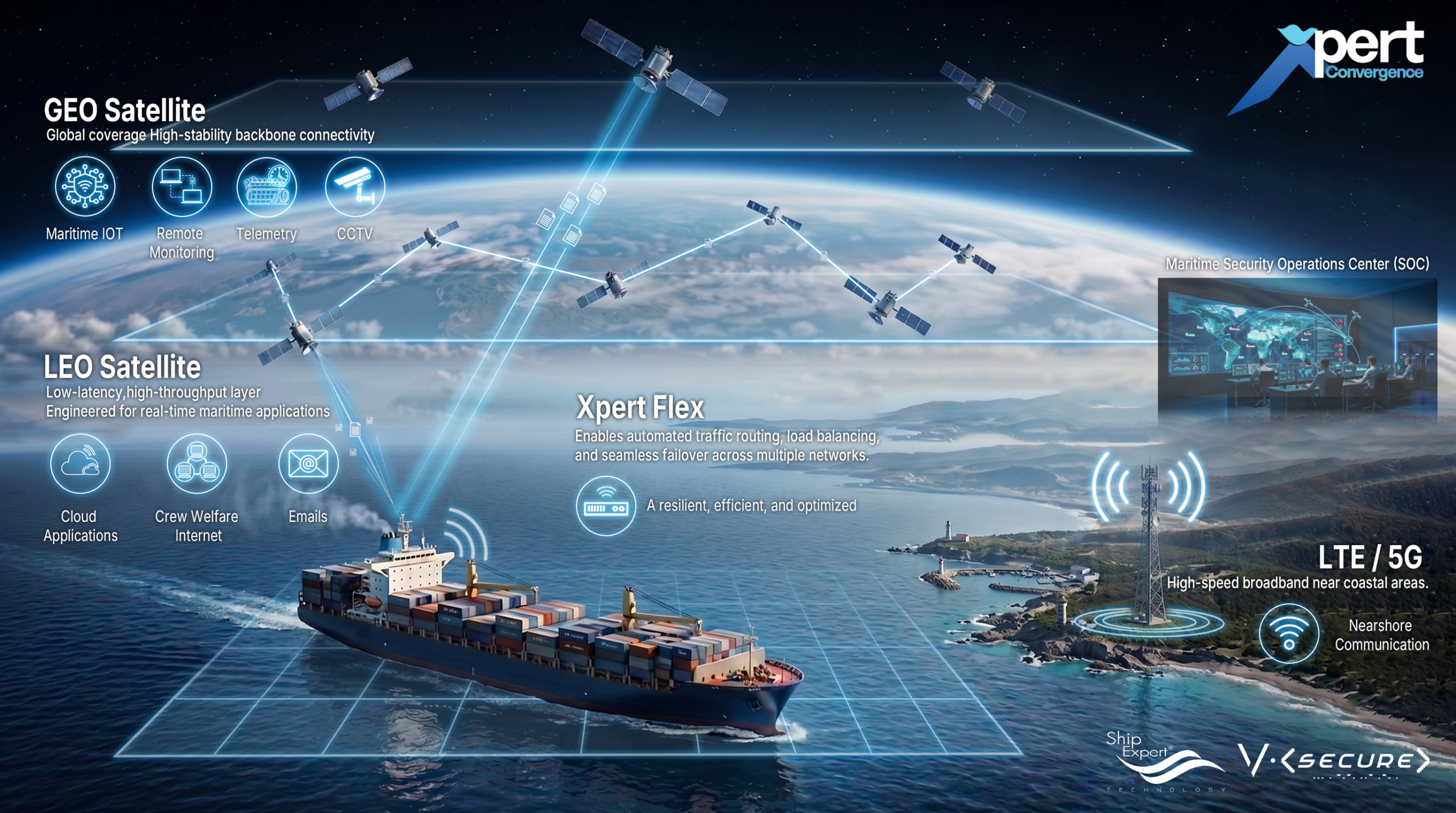
Hybrid multi-orbit architecture — combining GEO for stability and LEO for low latency — is no longer experimental. It is becoming the baseline for modern fleets. GEO delivers continuous backbone connectivity, ideal for stable operational data streams and IoT telemetry. LEO introduces responsiveness and higher throughput, supporting business applications and crew internet demands.
Together, they create optionality. But optionality without orchestration can quickly turn into unmanaged complexity.
Traffic competes.
Priorities blur.
Failover becomes reactive instead of engineered.
This is where connectivity must evolve from infrastructure to architecture.
The Control Layer: Xpert Flex
A hybrid network requires a decision-making layer.
Xpert Flex acts as that control layer — intelligently orchestrating traffic across GEO, LEO, and nearshore LTE environments.
It decides:
Which applications require stability.
Which demand low latency.
When failover should be automatic.
How bandwidth policies should be enforced.
Instead of manual switching or static allocation, the network becomes policy driven. For a shipowner, this means something very practical: Connectivity stops being a variable risk. It becomes a governed resource.
Visibility and Oversight: The Role of a Maritime SOC
Yet connectivity control alone is not sufficient.
Modern fleets face increasing regulatory and classification expectations.
IMO cyber risk management requirements are embedded in ISM.
IACS UR E26/E27 formalize cyber resilience at both equipment and architectural levels.
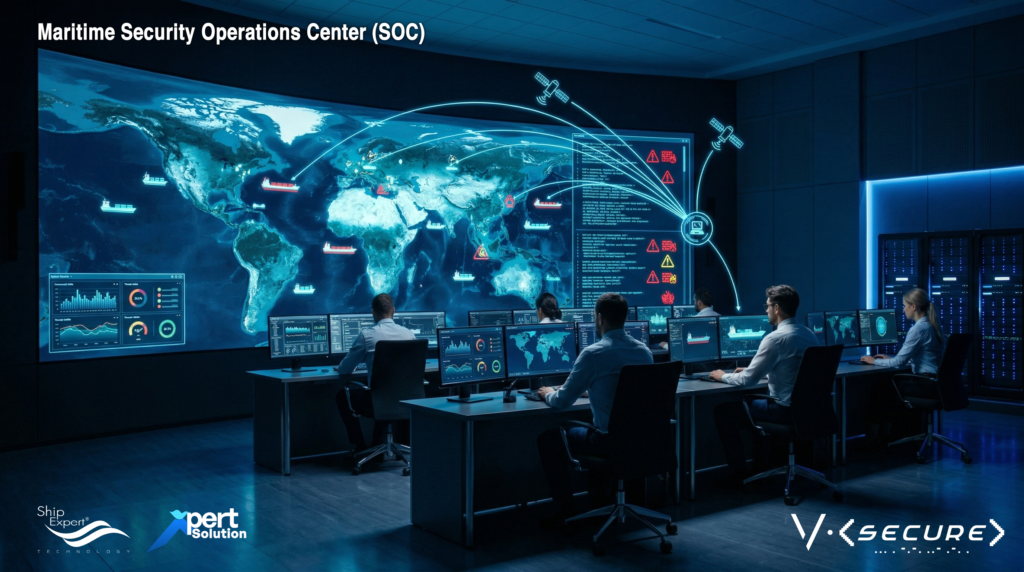
In this environment, oversight must be continuous. This is where V.Secure — operating as a maritime SOC framework — plays a critical role. While Xpert Flex governs how data flows, V.Secure monitors what happens within that flow.
It provides:
Fleet-wide visibility.
OT-aware anomaly detection.
Structured incident response coordination.
Governance-level reporting aligned with regulatory expectations.
The result is not simply cyber monitoring. It is demonstrable cyber resilience.
When the Three Layers Work Together
When Xpert Connect (multi-orbit infrastructure), Xpert Flex (intelligent orchestration), and V.Secure (continuous oversight) operate as a unified architecture, something important changes.
Connectivity becomes predictable.
Performance becomes policy driven.
Cyber posture becomes measurable.
Audit readiness becomes operational, not reactive.
For a shipowner, this translates into: Reduced operational disruption. Clearer cost visibility. Improved crew experience without compromising operations. Stronger alignment with regulatory and class expectations. Greater confidence in digital fleet expansion.
The Strategic Shift
The fleets that will lead the next decade are not those with the fastest internet. They are those with the most controlled digital infrastructure.
Hybrid connectivity provides the foundation.
Orchestration provides intelligence.
Oversight provides resilience.
When these layers converge, connectivity is no longer just about signal strength. It becomes operational control. And in modern maritime operations, control defines advantage.


Related Posts
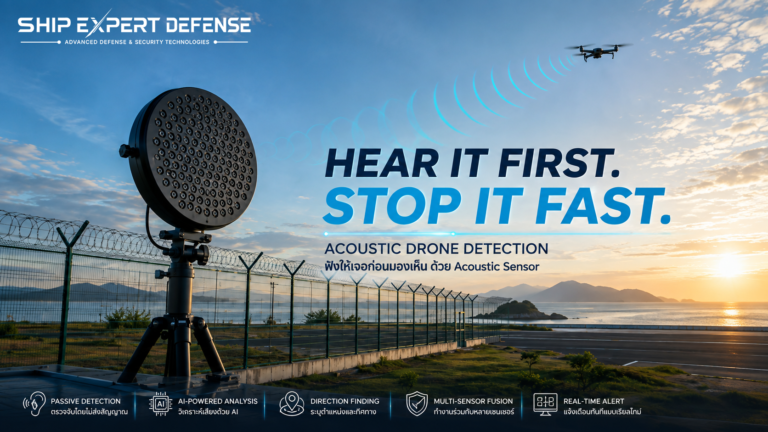
ฟังให้เจอก่อนมองเห็น บทบาทของ Acoustic Sensor ในระบบต่อต้านโดรน
เมื่อพูดถึงการตรวจจับโดรน หลายคนมักนึกถึงเรดาร์ที่ค้นหาเป้าหมายบนท้องฟ้า กล้องตรวจการณ์ที่ช่วยยืนยันภาพ หรือระบบตรวจจับคลื่นความถี่วิทยุที่วิเคราะห์การสื่อสารระหว่างโดรนกับผู้ควบคุม แต่ยังมีอีกหนึ่งเทคโนโลยีที่ช่วยเพิ่มความสามารถในการรับรู้ภัยคุกคาม นั่นคือ Acoustic Sensor หรือเซนเซอร์ตรวจจับโดรนด้วยเสียง เมื่อเสียงใบพัดกลายเป็นสัญญาณเตือนภัย ระหว่างบิน มอเตอร์และใบพัดของโดรนจะสร้างรูปแบบเสียงที่มีลักษณะเฉพาะ ระบบ Acoustic Sensor ใช้ไมโครโฟนหรือชุดไมโครโฟนแบบ Microphone Array รับสัญญาณดังกล่าว ก่อนนำข้อมูลไปวิเคราะห์เพื่อประเมินว่าเป็นเสียงของโดรนหรือเสียงจากสภาพแวดล้อม เทคโนโลยีประมวลผลสัญญาณและปัญญาประดิษฐ์สามารถช่วยจำแนกเสียงโดรนออกจากเสียงรบกวน เช่น ยานพาหนะ เครื่องจักร หรือนก ขณะที่การใช้ไมโครโฟนหลายตัวช่วยประเมินทิศทางของแหล่งกำเนิดเสียงได้ งานวิจัยยังแสดงให้เห็นว่าสามารถแปลงข้อมูลเสียงเป็น Spectrogram…
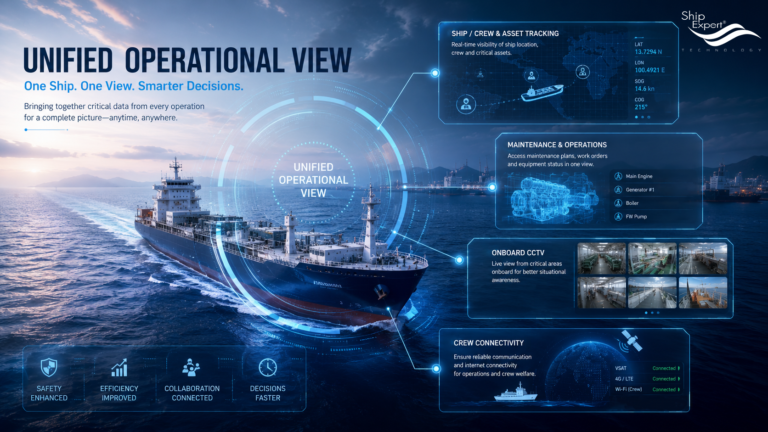
ทำไมธุรกิจเดินเรือจึงต้องการ Unified Operational View
การบริหารเรือในปัจจุบันเกี่ยวข้องกับข้อมูลมากมายมากกว่าในอดีต ตั้งแต่ตำแหน่งของเรือ สถานะลูกเรือและทรัพย์สินสำคัญบนเรือ แผนซ่อมบำรุง ภาพจากกล้อง CCTV ไปจนถึงการบริหารการเชื่อมต่ออินเทอร์เน็ตดาวเทียม ระบบเหล่านี้ช่วยให้ผู้ปฏิบัติงานรับรู้สิ่งที่เกิดขึ้นในแต่ละด้าน แต่เมื่อข้อมูลสำคัญกระจายอยู่ในหลายแพลตฟอร์ม หลายหน้าจอ และหลายทีม คำถามสำคัญจึงไม่ใช่เพียงว่า “เรามีข้อมูลเพียงพอหรือไม่” แต่คือ “เรามองเห็นภาพรวมของสถานการณ์ได้ชัดเจนเพียงใด เมื่อต้องตัดสินใจจริง” เรือหนึ่งลำ หลายระบบ หลายมุมมอง สำหรับบริษัทเดินเรือ เรือหนึ่งลำอาจมีระบบสนับสนุนการปฏิบัติงานหลายประเภท โดยแต่ละระบบมีบทบาทแตกต่างกัน ระบบติดตามตำแหน่งช่วยให้ทราบว่าเรืออยู่บริเวณใด ขณะที่ระบบติดตามลูกเรือและทรัพย์สินช่วยให้ผู้เกี่ยวข้องเข้าใจว่าบุคลากรหรืออุปกรณ์สำคัญอยู่ส่วนใดของเรือ ระบบซ่อมบำรุงและการปฏิบัติงานช่วยจัดการแผนงาน ประวัติการซ่อม และสถานะของเครื่องจักร ส่วนกล้อง…
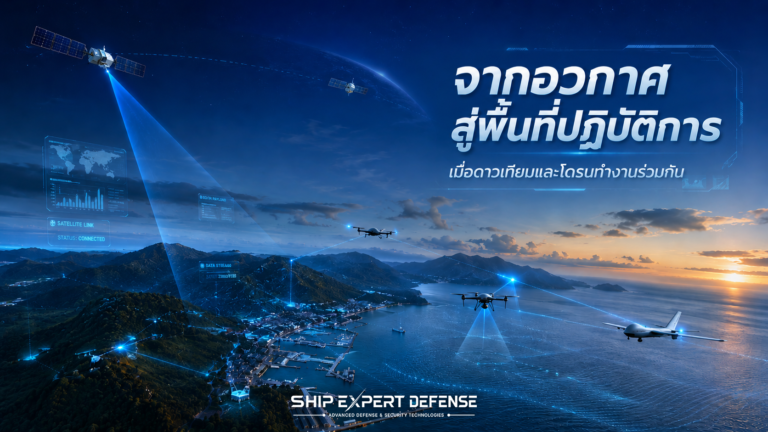
จากอวกาศสู่พื้นที่ปฏิบัติการ
เมื่อดาวเทียมและโดรนทำงานร่วมกัน เมื่อพูดถึงการตรวจการณ์พื้นที่ชายแดน ชายฝั่ง ทะเล โครงสร้างพื้นฐานสำคัญ หรือพื้นที่เกิดภัยพิบัติ เทคโนโลยีที่มักถูกกล่าวถึงคือ “โดรน” และ “ดาวเทียมสำรวจโลก” แม้ทั้งสองระบบจะสามารถบันทึกภาพและติดตามความเปลี่ยนแปลงได้เหมือนกัน แต่ในทางปฏิบัติกลับมีจุดเด่นและข้อจำกัดต่างกัน จึงไม่ควรมองว่าเทคโนโลยีใดดีกว่า หากควรพิจารณาว่าแต่ละระบบเหมาะกับขั้นตอนใดของภารกิจ ดาวเทียม: มองเห็นภาพกว้างจากอวกาศ จุดแข็งสำคัญของดาวเทียมคือความสามารถในการสำรวจพื้นที่ขนาดใหญ่ ไม่ว่าจะเป็นแนวชายแดน พื้นที่ทางทะเล เส้นทางคมนาคม หรือบริเวณที่เข้าถึงได้ยาก ข้อมูลภาพจากหลายช่วงเวลายังสามารถนำมาเปรียบเทียบเพื่อค้นหาการเปลี่ยนแปลง เช่น การปรากฏขึ้นของสิ่งปลูกสร้าง การเคลื่อนย้ายยานพาหนะ หรือกิจกรรมที่ผิดไปจากรูปแบบปกติ ดาวเทียมแบบ…